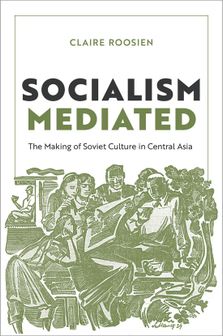
Socialism Oxford University Press Socialism Mediated

Socialism Oxford University Press Socialism Mediated

Alle 1 prijzen en aanbieders

Meest populaire keuze – Scherpste prijs!
Amazon.be Marketplace· Marketplace
€ 125,30
3 tot 4 dagenVerz. € 2,00
Check de website voor de levertijd | Gratis bezorgd > €20,-
Bekijk product
Bekijk product

Er zijn nog geen reviews geschreven

Vraag 1 van 4

Heb jij dit product in bezit en wil je graag je mening geven? Start dan hieronder met het schrijven van je review. Afhankelijk van de details duurt het schrijven van een review gemiddeld tussen de 3 en 10 minuten. Met jouw mening help je andere bezoekers een betere keuze te maken én maak je iedere maand kans op €250,-! Klik hier voor de actievoorwaarden.

Welk cijfer geef jij dit product?

Specificaties

Mogelijke vereisten instellen en gebruik
Bluetooth vereist
Nee
Delen van gebruikersgegevens vereist
Nee
Kan zelfstandig met internet verbinden
Nee
Mobiele data verbinding mogelijk
Nee
App vereist voor volledige functionaliteit
Nee
Wifi vereist
Nee
Betaalde diensten vereist
Nee
EAN
9780198971184
Verpakkingsgewicht
653 g
Introductiemaand
5
Introductiejaar
2026
Ondersteuning met updates
Nee
Naam verantwoordelijke marktdeelnemer in de EU
Oxford University Press España S.A. of El Parque Empresarial
Product breedte
16,5 cm
Product lengte
24,2 cm
Verpakking breedte
16,5 cm
Verpakking hoogte
3 cm
Verpakking lengte
24,2 cm
Aantal meegeleverde accu's/batterijen
0
Personage van toepassing
Nee
Met verlichting
Nee
CE markering
Nee
Gewonnen prijzen
0
Aantal benodigde accu's/batterijen
0
Wasbaar
Nee
Maakt geluid
Nee

Productomschrijving

Socialism MediatedEPLACELESSTHAN/i> explores how the historically Muslim cultural producers of Central Asia participated in making Soviet culture appealing and comprehensible to their fellow Central Asians.


When the Bolsheviks took over in Central Asia, they inherited a region that the Russian Empire had colonized less than fifty years before. Tenuously integrated into the Russian Empire and predominantly Muslim, the territories that became the republics of Central Asia were a far cry from the societies where Marxism-Leninism was forged. Despite their narrow foothold, Soviet authorities represented themselves as acting according to the will of Central Asia's people. That representation became increasingly urgent as the state wielded unprecedented violence to enact its policies, such as collectivization, cottonization, religious repression, and women's unveiling. To bridge the gap between Central Asia's masses and the interventionist state agenda many of them perceived as foreign, the Soviet Party-state employed a cohort of Central Asian activists and cultural producers who made common cause with the Bolsheviks. They worked to reorganize social institutions, remake musical form, reshape literary life, and recreate collective imaginaries in conditions of extreme uncertainty and rampant violence. Socialism Mediated tells the story of these mediators who made Soviet culture in Uzbekistan. From Socialist Realist writers to popular singers, from women's activists to village worker-correspondents, they all worked within Soviet institutions to make Uzbek culture Soviet, and to make Soviet culture Uzbek. Drawing on a wide variety of archival and published sources from collections in three countries, Roosien provides the first study of how Central Asians interpreted, implemented, and resisted the Party-state's utterly novel cultural directives. Through close analysis of cultural production in conversation with social historical methods, she shows how Central Asia's intermediaries formulated a new aesthetics of Socialist Realism as a way to mobilize a legitimizing public for the newfound socialist state, while also often revealing the tensions and inconsistencies in that project. Far from a totalizing takeover, the creation of Soviet culture in Uzbekistan was riven with contradictions and gaps, revealing the unexpected resonances and unresolved tensions in the Soviet project of mass publicity. Socialism Mediated illuminates hotly debated questions about the legacies of empire and colonialism in the Soviet Union and sheds light on the cultural history of 1930s Central Asia, hitherto unexamined in English.