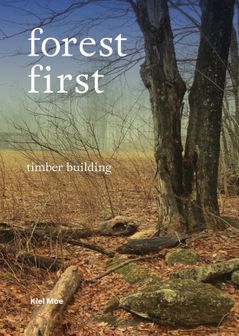
Forest First: Timber Building

Forest First: Timber Building

Alle 1 prijzen en aanbieders

Meest populaire keuze – Scherpste prijs!
Amazon.be Marketplace· Marketplace
€ 38,01
-23% prijsdaling
3 tot 4 dagenVerz. € 2,99
Check de website voor de levertijd | Gratis bezorgd > €20,-
Bekijk product
Bekijk product

Er zijn nog geen reviews geschreven

Vraag 1 van 4

Heb jij dit product in bezit en wil je graag je mening geven? Start dan hieronder met het schrijven van je review. Afhankelijk van de details duurt het schrijven van een review gemiddeld tussen de 3 en 10 minuten. Met jouw mening help je andere bezoekers een betere keuze te maken én maak je iedere maand kans op €250,-! Klik hier voor de actievoorwaarden.

Welk cijfer geef jij dit product?

Specificaties

Belangrijkste kenmerken
EAN
9781638402015

Productomschrijving

This book puts the forest first and offers a detailed immersion into forest history, forest stand dynamics, forest ecology, forest-building carbon dynamics, and possible future forest trajectories as the pretext for thinking about timber building technics. 

The specificity of regional forests suggests much about the prospect of non-extractive building design: building that tends and mends its terrestrial basis rather than takes, makes, and breaks it. How might we design and build in a non-extractive manner?
To address that evolutionary question this book considers the recursive relationship between forests and timber building. It puts the forest first and offers a detailed immersion into forest history, forest stand dynamics, forest ecology, forest-building carbon dynamics, and possible future forest trajectories as the pretext for thinking about timber building technics. The specificity of regional forests suggests much about the prospect of non-extractive building design: building that tends and mends its terrestrial basis rather than takes, makes, and breaks it. Building activity can augment and improve forest conditions as an instance of regenerative design and as a path towards reconciliation, but only if conceived, valued, and practiced in ways distinct from normative design and construction practices.

The future should no longer be a colony of present design practices that treat building as an art and science of extraction. By putting the forest first its conception of timber building technics, this book develops a more regenerative approach to the terrestrial relations of forest-building.