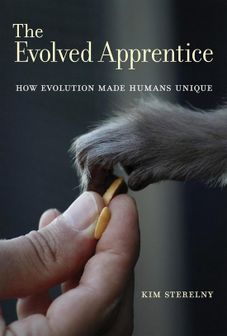
The Bradford Books Evolved Apprentice

The Bradford Books Evolved Apprentice

Alle 2 prijzen en aanbieders

Meest populaire keuze
Laagste prijs
Amazon.be Marketplace· Marketplace
€ 22,50
3 tot 4 dagenGratis verzending
Check de website voor de levertijd | Gratis bezorgd > €20,-
Bekijk product
Bekijk product
Laagste prijs
Amazon.be· Bekende aanbieder
€ 22,50
3 tot 4 dagenGratis verzending
Check de website voor de levertijd | Gratis bezorgd > €20,-

Bekijk
Bekijk product

Er zijn nog geen reviews geschreven

Vraag 1 van 4

Heb jij dit product in bezit en wil je graag je mening geven? Start dan hieronder met het schrijven van je review. Afhankelijk van de details duurt het schrijven van een review gemiddeld tussen de 3 en 10 minuten. Met jouw mening help je andere bezoekers een betere keuze te maken én maak je iedere maand kans op €250,-! Klik hier voor de actievoorwaarden.

Welk cijfer geef jij dit product?

Specificaties

Overige kenmerken
Product breedte
15,2 cm
Product hoogte
1,2 cm
Product lengte
22,9 cm
Taal handleiding
en
Verpakking breedte
15,2 cm
Verpakking hoogte
1,2 cm
Verpakking lengte
22,9 cm
Verpakkingsgewicht
216 g
EAN
9780262526661

Productomschrijving

A new theory of the evolution of human cognition and human social life that emphasizes the role of information sharing across generations. Over the last three million years or so, our lineage has diverged sharply from those of our great ape relatives. Change has been rapid (in evolutionary terms) and pervasive. Morphology, life history, social life, sexual behavior, and foraging patterns have all shifted sharply away from those of the other great apes. In The Evolved Apprentice, Kim Sterelny argues that the divergence stems from the fact that humans gradually came to enrich the learning environment of the next generation. Humans came to cooperate in sharing information, and to cooperate ecologically and reproductively as well, and these changes initiated positive feedback loops that drove us further from other great apes. Sterelny develops a new theory of the evolution of human cognition and human social life that emphasizes the gradual evolution of information-sharing practices across generations and how these practices transformed human minds and social lives. Sterelny proposes that humans developed a new form of ecological interaction with their environment, cooperative foraging. The ability to cope with the immense variety of human ancestral environments and social forms, he argues, depended not just on adapted minds but also on adapted developmental environments.