
Choix le plus populaire

Amazon.be· Vendeur reconnu
€ 73,56
3 à 4 joursLivraison gratuite
Check de website voor de levertijd | Gratis bezorgd > €20,-


Tu possèdes ce produit et tu aimerais donner ton avis ? Commence ci-dessous à écrire ton avis. Selon le niveau de détail, écrire un avis prend en moyenne entre 3 et 10 minutes. Avec ton opinion, tu aides les autres visiteurs à faire un meilleur choix et tu tentes chaque mois de gagner 250 € ! Clique ici pour les conditions de l’action.
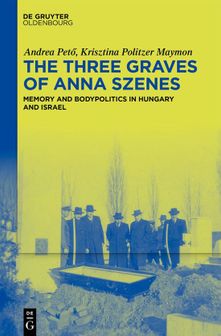
This volume seeks answers to the question of why Anikó Szenes (1921–1944), a Jewish girl born and assimilated in Budapest who was murdered at the age of twenty-three, has three graves. What is the story behind these three places? Who were the people involved in this process, and what role did they play? On 7 November 1944, Anikó Szenes was executed in Budapest. In March 1950, during the Cold War, her body was taken from the Jewish cemetery on Kozma Street in Budapest to Italy via Austria under adventurous circumstances. In Naples, the coffin was loaded onto a ship and then transported to Haifa on another, more ceremonial-looking ship, from where, after a national mourning tour, it was buried in Jerusalem alongside Theodor Herzl, the founder of Zionism and the visionary of the State of Israel. The volume traces the decades-long journey of Szenes’s body and grave across Europe. Through this story, it recounts not only the history of the Holocaust in Hungary and Israel as remembered by different social groups, but also the history of Jewish resistance, full of silence and conflict.
The volume was written by Andrea Pető, a historian at CEU Vienna, and Krisztina Politzer Maymon, a lawyer living in Israel and editor of the Izraelinfo journalism project.
