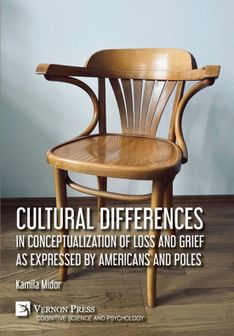
Vernon Art And Science Différences culturelles dans la conceptualisation de la perte et du deuil telles qu'exprimées par les Américains et les Polonais

Vernon Art And Science Différences culturelles dans la conceptualisation de la perte et du deuil telles qu'exprimées par les Américains et les Polonais

Tous les 1 prix et vendeurs

Choix le plus populaire – Meilleur prix !
Amazon.be Marketplace· Marketplace
€ 84,71
3 à 4 joursLivraison gratuite
Check de website voor de levertijd | Gratis bezorgd > €20,-
Voir le produit
Voir le produit

Aucun avis n’a encore été écrit

Question 1 sur 4

Tu possèdes ce produit et tu aimerais donner ton avis ? Commence ci-dessous à écrire ton avis. Selon le niveau de détail, écrire un avis prend en moyenne entre 3 et 10 minutes. Avec ton opinion, tu aides les autres visiteurs à faire un meilleur choix et tu tentes chaque mois de gagner 250 € ! Clique ici pour les conditions de l’action.

Quelle note donnes-tu à ce produit ?

Spécifications

Autres caractéristiques
Guide linguistique
en
Largeur de l'emballage
15,2 cm
Hauteur de l'emballage
1,9 cm
Longueur de l'emballage
22,9 cm
Largeur du produit
15,2 cm
Hauteur du produit
1,9 cm
Longueur du produit
22,9 cm
EAN
9798261600916

Description du produit

How do people put into words the experience of losing someone they love? This book offers a systematic, cross-cultural linguistic analysis of how loss and grief are conceptualized in American and Polish contexts, revealing both shared human patterns and culturally specific ways of expressing and processing bereavement.Drawing on qualitative data from nearly eighty participants who had lost a loved one up to five years before participating in the study, the study examines the metaphors and conceptual blends through which individuals articulate their experiences of grief. Using the frameworks of conceptual metaphor theory and conceptual integration theory, the book identifies recurrent conceptual structures-such as absence, emptiness, pain, inanimate physical object, and journey-that speakers draw on to make sense of profound emotional disruption. While many of these schemas appear across both cultural groups, the analysis reveals important differences in their subtypes, linguistic realizations, and cultural meanings. Notably, some patterns challenge the dominant view of grief as exclusively negative, including personifications such as grief as a guest in American narratives and grief as a teacher in the Polish data.The book fills a significant interdisciplinary gap between linguistic research on metaphor and psychological scholarship on grief. It is the first work to develop empirically grounded conceptual models of loss and grief for American and Polish speakers based on qualitative linguistic data, offering a novel, culturally sensitive perspective on bereavement.Accessible yet theoretically rigorous, the book will be valuable as a research reference, a methodological model for qualitative metaphor analysis, and a resource for classroom use. It will appeal to scholars and students in cognitive linguistics, cultural studies, psycholinguistics, and cross-cultural communication, as well as to psychologists, therapists, counselors, social workers, and others working professionally with grief and loss.