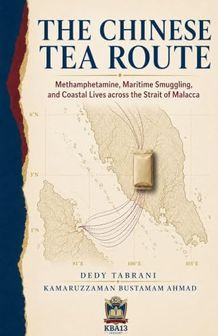
The Libri GmbH The Chinese Tea Route: Methamphetamine, Maritime Smuggling, and Coastal Lives across the Strait of Malacca Paperback

The Libri GmbH The Chinese Tea Route: Methamphetamine, Maritime Smuggling, and Coastal Lives across the Strait of Malacca Paperback

Tous les 2 prix et vendeurs

Choix le plus populaire – Meilleur prix !

Amazon.be· Vendeur reconnu
€ 62,23
3 à 4 joursVerz. € 5,49
Check de website voor de levertijd | Gratis bezorgd > €20,-
Voir le produit
Voir le produit
Amazon.be Marketplace· Marketplace
€ 62,23
3 à 4 joursVerz. € 5,49
Check de website voor de levertijd | Gratis bezorgd > €20,-
Voir le produit
Voir le produit

Spécifications

Verpakkingsinformatie
Verpakking lengte
21,6 cm
Verpakking breedte
14 cm
Verpakking hoogte
3 cm
EAN
9798235759008
Fabrikant Naam
Libri GmbH

Description du produit

At dawn on the estuaries of Aceh's east coast the same scene recurs. A boat comes alongside, sacks are lowered onto the sand, and someone unties the knots. Inside lie packets of branded Chinese tea, neatly sealed as though lifted straight from a shop shelf, filled with crystal methamphetamine.The Chinese Tea Route follows that packaging along one of the busiest methamphetamine corridors in the world, from the laboratories of Shan State, down the Thai peninsula and the west coast of Malaysia, across the Strait of Malacca and onto the coasts of Aceh and North Sumatra, and outward to retail markets at Indonesia's eastern edge. Dedy Tabrani and Kamaruzzaman Bustamam Ahmad read district court judgments from Aceh, North Sumatra and the Riau Islands not merely as legal documents but as ethnographic records, and set them alongside official records of enforcement agencies in Indonesia, Malaysia and Thailand, reports of international organisations, and field enquiry at coastal landing points.Three questions guide the book. Why does the Strait of Malacca continue to furnish the opportunity for crossings measured in tonnes? Who bears the risk and who collects the profit along a chain that runs from the Shan valleys to a street corner in Medan or Jayapura? And why has enforcement that appears successful on paper, with seizures growing year upon year, never halted the flow from which those seizures are drawn?The account follows the movement of the commodity itself. It maps the strait and its shallow, crowded, jurisdictionally divided waters; assembles a chronicle of seizures between 2020 and 2026, from small wooden boats at Acehnese estuaries to tonne-scale vessels off Karimun; enters the informal landing routes that serve as the zero point of national distribution; and then turns from space to people, dissecting the anatomy of the network, the fishers who occupy its most exposed layer, the state personnel who stand inside the trade, and the contents of the case files themselves.One word binds the argument together: asymmetry. Risk is pushed downward and profit is gathered upward. The fisher who carries sacks aboard a shallow-draught boat for a few million rupiah faces the gravest penalties available in law, while the financier who ordered the carriage from across a border remains all but untouched. That economic disparity is layered with legal, geographical and informational disparities, and it is precisely from those layers that the network draws its resilience.Documented, unsentimental and quietly unsettling, this is a study for scholars of criminology, maritime security, anthropology and Southeast Asian studies, for policymakers and enforcement professionals, and for any reader willing to follow where the impressive seizure figures actually point.

Avis

Aucun avis n’a encore été écrit

Tu possèdes ce produit et tu aimerais donner ton avis ? Commence ci-dessous à écrire ton avis. Selon le niveau de détail, écrire un avis prend en moyenne entre 3 et 10 minutes. Avec ton opinion, tu aides les autres visiteurs à faire un meilleur choix et tu tentes chaque mois de gagner 250 € ! Clique ici pour les conditions de l’action.

Quelle note donnes-tu à ce produit ?