
Choix le plus populaire – Meilleur prix !

Amazon.be Marketplace· Marketplace
€ 166,05
3 à 4 joursVerz. € 3,99
Check de website voor de levertijd | Gratis bezorgd > €20,-

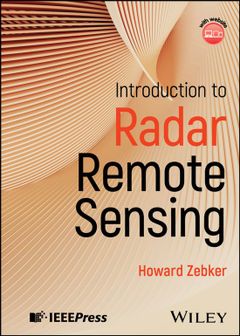
As imaging radar satellites proliferate and applications expand from geophysical exploration to disaster mitigation, engineers and scientists need rigorous grounding in radar fundamentals. Introduction to Radar Remote Sensing delivers theory and practice from first principles, written by a National Academy of Engineering member who has contributed to NASA missions including NISAR, Voyager, and Cassini.
Starting with historical context, this book progresses through electromagnetic theory and radar modalities to modern imaging systems and their applications. These span Earth and planetary ocean, atmosphere, and solid Earth geophysics such as topographic mapping and surface deformation and change. The author derives all relations from original physical principles, making the material applicable beyond radar to any Earth observation system.
The book includes:
Designed for graduate and senior undergraduate students in engineering programs, this book serves as the primary text for introductory remote sensing courses. Researchers transitioning into radar applications will find the physics-based approach provides the foundation needed to develop novel observational techniques and systems.
Tu possèdes ce produit et tu aimerais donner ton avis ? Commence ci-dessous à écrire ton avis. Selon le niveau de détail, écrire un avis prend en moyenne entre 3 et 10 minutes. Avec ton opinion, tu aides les autres visiteurs à faire un meilleur choix et tu tentes chaque mois de gagner 250 € ! Clique ici pour les conditions de l’action.
