
Choix le plus populaire – Meilleur prix !

Amazon.be· Vendeur reconnu
€ 23,72
6 jours ou plusLivraison gratuite
Check de website voor de levertijd | Gratis bezorgd > €20,-


A call to end the Western museum
“A complete overhaul of the Western museum tradition”—Publishers Weekly
“An impressive critique of the universal museum as complicit in the damages inflicted by colonial power”—Isaac Julien, artist and filmmaker
“Should fascinate anyone interested in social justice, post-colonialism and the arts”—Euronews
“Powerful and so relevant”—Diacritik
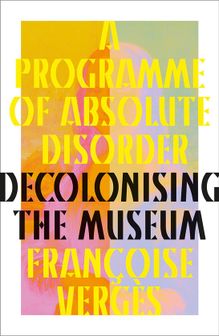
The Western museum is a battleground—a terrain of ideological, political and economic contestation. Almost everyone today wants to rethink the museum, but how many have the audacity to question the idea of the universal museum itself?
In A Programme of Absolute Disorder, Françoise Vergès puts the museum in its place. Exploring the Louvre’s history, she uncovers the context in which the universal museum emerged: as a product of colonialism, and of Europe’s self-appointed claim to be the guardian of global heritage.
Vergès outlines a radical horizon: to truly decolonize the museum is to implement a “programme of absolute disorder”, inventing other ways of apprehending the human and non-human world that nourish collective creativity and bring justice and dignity to the dispossessed.
Françoise Vergès is a political scientist, activist, historian, film writer, and public educator. She is the author of A Decolonial Feminism and A Feminist History of Violence. She is also a senior research fellow at the Sarah Parker Remond Centre for the Study of Racism and Racialisation, University College London.
'A complete overhaul of the Western museum tradition' - Publishers Weekly
In A Programme of Absolute Disorder, Françoise Vergès strips away the veneer of the universal Western museum to reveal its origins as the foundation of liberal ideology.
By exploring the history of the Louvre, and following the radical tradition of Frantz Fanon, she argues that the modern institution cannot just be fixed with a more diverse board or by finding new ways to display the art.
Instead, she demands a 'post-museum': a space that rejects the financialization of art, acknowledges the bloody history of its collections, and prioritises the labour and dignity of those who clean, guard and inhabit its halls.
Tu possèdes ce produit et tu aimerais donner ton avis ? Commence ci-dessous à écrire ton avis. Selon le niveau de détail, écrire un avis prend en moyenne entre 3 et 10 minutes. Avec ton opinion, tu aides les autres visiteurs à faire un meilleur choix et tu tentes chaque mois de gagner 250 € ! Clique ici pour les conditions de l’action.
