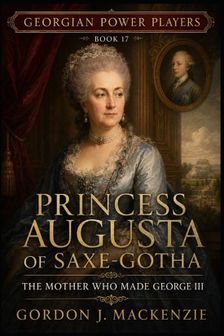
Independently Published Georgian Power Players- Princess Augusta of Saxe-Gotha

Independently Published Georgian Power Players- Princess Augusta of Saxe-Gotha

Tous les 1 prix et vendeurs

Choix le plus populaire – Meilleur prix !

Amazon.be· Vendeur reconnu
€ 17,39
3 à 4 joursVerz. € 2,49
Check de website voor de levertijd | Gratis bezorgd > €20,-
Voir le produit
Voir le produit

Aucun avis n’a encore été écrit

Question 1 sur 4

Tu possèdes ce produit et tu aimerais donner ton avis ? Commence ci-dessous à écrire ton avis. Selon le niveau de détail, écrire un avis prend en moyenne entre 3 et 10 minutes. Avec ton opinion, tu aides les autres visiteurs à faire un meilleur choix et tu tentes chaque mois de gagner 250 € ! Clique ici pour les conditions de l’action.

Quelle note donnes-tu à ce produit ?

Spécifications

Caractéristiques techniques
Adapté au diamètre de la branche
Non
Technique de taille
Non
EAN
9798192917565
Nom du participant responsable du marché dans l'UE
Libri GmbH
Poids de l'emballage
467 g
EAN
9798192917565
Poids du produit
467 g
Largeur du produit
15,2 cm
Hauteur du produit
2,4 cm
Longueur du produit
22,9 cm
Largeur de l'emballage
15,2 cm
Hauteur de l'emballage
2,4 cm
Longueur de l'emballage
22,9 cm

Description du produit

Princess Augusta of Saxe-Gotha arrived in Britain as a seventeen-year-old German bride. She spoke little English, knew almost nothing of her adopted country and entered a royal family already divided by hostility. Yet the quiet princess would become the mother of George III and one of the most controversial women of the Georgian court.Her marriage to Frederick, Prince of Wales, placed Augusta at the centre of his struggle against George II. When Frederick died unexpectedly in 1751, she was left a young widow responsible for protecting the future king. Her response was cautious, disciplined and politically consequential. She guarded George's education, strengthened his sense of royal duty and helped prepare him for the Crown.Augusta's close association with Lord Bute made her a target of political hostility. Pamphleteers, cartoonists and opposition journalists portrayed her as a foreign intriguer controlling her son through a secret favourite. John Wilkes turned attacks upon Augusta and Bute into some of the most explosive political writing of the eighteenth century.Princess Augusta of Saxe-Gotha: The Mother Who Made George III examines the woman behind the accusations. It follows her journey from a minor German court to Leicester House, Kew and the centre of British royal politics. It separates documented influence from sexual scandal, partisan propaganda and later mythology.Augusta never became queen and never held formal office. Her achievement was more enduring: she raised the first Hanoverian monarch born in Britain and helped secure the dynasty that would define the Georgian age.