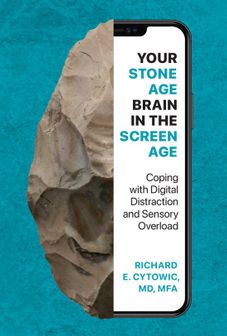
Your Mit Press Your Stone Age Brain in the Screen Age: Coping with Digital Distraction and Sensory Overload

Your Mit Press Your Stone Age Brain in the Screen Age: Coping with Digital Distraction and Sensory Overload

Tous les 2 prix et vendeurs

Choix le plus populaire
Prix le plus bas
Amazon.be Marketplace· Marketplace
€ 25,05
3 à 4 joursLivraison gratuite
Check de website voor de levertijd | Gratis bezorgd > €20,-
Voir le produit
Voir le produit
Prix le plus bas
Amazon.be· Vendeur reconnu
€ 25,05
3 à 4 joursLivraison gratuite
Check de website voor de levertijd | Gratis bezorgd > €20,-

Voir
Voir le produit

Spécifications

Autres caractéristiques
Largeur du produit
15,2 cm
Longueur du produit
22,9 cm
Guide linguistique
en
Largeur de l'emballage
15,2 cm
Hauteur de l'emballage
2,6 cm
Longueur de l'emballage
22,9 cm
Poids de l'emballage
369 g
EAN
9780262057264

Description du produit

An award-winning neurologist on the Stone-Age roots of our screen addictions, and what to do about them.

The human brain hasn’t changed much since the Stone Age, let alone in the mere thirty years of the Screen Age. That’s why, according to neurologist Richard Cytowic—who, Oliver Sacks observed, “changed the way we think of the human brain”—our brains are so poorly equipped to resist the incursions of Big Tech: They are programmed for the wildly different needs of a prehistoric world. In Your Stone Age Brain in the Screen Age, Cytowic explains exactly how this programming works—from the brain’s point of view. What he reveals in this book shows why we are easily addicted to screen devices; why young, developing brains are particularly vulnerable; why we need silence; and what we can do to push back.

In the engaging storytelling style of his popular TED Talk, Cytowic draws an easily comprehensible picture of the Stone Age brain’s workings—the function of neurotransmitters like dopamine in basic instincts for survival such as desire and reward; the role of comparison in emotion, and emotion in competition; and, most significantly, the orienting reflex, one of the unconscious circuits that automatically focus, shift, and sustain attention. Given this picture, the nature of our susceptibility to digital devices becomes clear, along with the possibility of how to break their spell.

Full of practical actions that we can start taking right away, Your Stone Age Brain in the Screen Age offers compelling evidence that we can change the way we use technology, resist its addictive power over us, and take back the control we have lost.

Aucun avis n’a encore été écrit

Question 1 sur 4

Tu possèdes ce produit et tu aimerais donner ton avis ? Commence ci-dessous à écrire ton avis. Selon le niveau de détail, écrire un avis prend en moyenne entre 3 et 10 minutes. Avec ton opinion, tu aides les autres visiteurs à faire un meilleur choix et tu tentes chaque mois de gagner 250 € ! Clique ici pour les conditions de l’action.

Quelle note donnes-tu à ce produit ?