
Choix le plus populaire – Meilleur prix !

Amazon.be Marketplace· Marketplace
€ 171,19
5 à 6 joursLivraison gratuite
Check de website voor de levertijd | Gratis bezorgd > €20,-

Tu possèdes ce produit et tu aimerais donner ton avis ? Commence ci-dessous à écrire ton avis. Selon le niveau de détail, écrire un avis prend en moyenne entre 3 et 10 minutes. Avec ton opinion, tu aides les autres visiteurs à faire un meilleur choix et tu tentes chaque mois de gagner 250 € ! Clique ici pour les conditions de l’action.
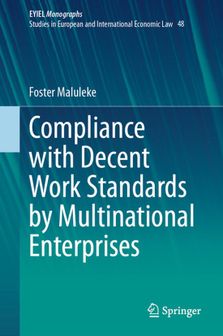
This book provides a critical examination of the deficiencies in decent work within global supply chains. It explicitly identifies and discusses the core elements of decent work as defined by the International Labour Organisation's (ILO) decent work agenda, while underscoring the essential international human and labour rights principles that are integral to achieving these standards. The study firmly asserts that multinational enterprises (MNEs) have a pivotal role in advancing decent work initiatives. However, it is undeniable that many of these enterprises frequently fail to comply with established decent work standards. MNEs have gained stronger international influence, and they are able to move their businesses to countries with low cost of labour and less regulations. This phenomenon weakens the governments of host nations as they are keen to promote foreign direct investment in order to reduce unemployment and to ensure economic growth. As a result, the host nations are encouraged to set laws that will attract MNEs at the expense of human and core labour rights. As a result, MNEs are not held accountable in respect of alleged abuses of human and labour rights.
This book recommends regulatory reforms, which will empower the ILO to intervene to prevent human and labour rights violations by MNEs and where such violations occur, to at least provide effective remedies to vulnerable employees.
