
Choix le plus populaire – Meilleur prix !

Amazon.be· Vendeur reconnu
€ 65,30
3 à 4 joursLivraison gratuite
Check de website voor de levertijd | Gratis bezorgd > €20,-


This book is a concise but thorough introduction to the tools commonly used in pattern recognition and machine learning, including classification, dimensionality reduction, regression, and clustering, as well as recent popular topics such as deep neural networks and Gaussian process regression.
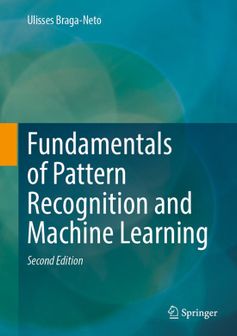
This book is a concise but thorough introduction to the tools commonly used in pattern recognition and machine learning, including classification, dimensionality reduction, regression, and clustering, as well as recent popular topics such as deep neural networks and Gaussian process regression. The Second Edition is thoroughly revised, featuring a new chapter on the emerging topic of physics-informed machine learning and additional material on deep neural networks.
Combining theory and practice, this book is suitable for the graduate or advanced undergraduate level classroom and self-study. It fills the need of a mathematically-rigorous text that is relevant to the practitioner as well, with datasets from applications in bioinformatics and materials informatics used throughout to illustrate the theory. These datasets are available from the book website to be used in end-of-chapter coding assignments based on python and Keras/Tensorflow. All plots in the text were generated using python scripts and jupyter notebooks, which can be downloaded from the book website.
This book is a concise but thorough introduction to the tools commonly used in pattern recognition and machine learning, including classification, dimensionality reduction, regression, and clustering, as well as recent popular topics such as deep neural networks and Gaussian process regression. The Second Edition is thoroughly revised, featuring a new chapter on the emerging topic of physics-informed machine learning and additional material on deep neural networks.
Combining theory and practice, this book is suitable for the graduate or advanced undergraduate level classroom and self-study. It fills the need of a mathematically-rigorous text that is relevant to the practitioner as well, with datasets from applications in bioinformatics and materials informatics used throughout to illustrate the theory. These datasets are available from the book website to be used in end-of-chapter coding assignments based on python and Keras/Tensorflow. All plots in the text were generated using python scripts and jupyter notebooks, which can be downloaded from the book website.
Tu possèdes ce produit et tu aimerais donner ton avis ? Commence ci-dessous à écrire ton avis. Selon le niveau de détail, écrire un avis prend en moyenne entre 3 et 10 minutes. Avec ton opinion, tu aides les autres visiteurs à faire un meilleur choix et tu tentes chaque mois de gagner 250 € ! Clique ici pour les conditions de l’action.
