
Hot Deal Alert

Amazon.be· Vendeur reconnu
€ 122,64
3 à 4 joursLivraison gratuite
Check de website voor de levertijd | Gratis bezorgd > €20,-


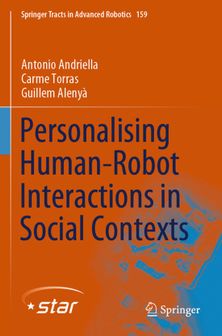
This book offers an insightful exploration of the pivotal role of robots in our ever-changing society. As intelligent machines become increasingly integrated into various aspects of our lives, their impact on how we live, work, and interact becomes undeniable.
Within these pages, the book delves into the key concept of personalisation, unravelling the profound importance of tailoring robotic interactions to meet the unique needs and preferences of individuals. This exploration seeks to foster a deeper understanding of how robots can enhance our lives and potentially be a worthwhile technology to address some important societal issues. To showcase that, the book centres on a practical use case that is built upon collaboration with healthcare experts: designing personalised robots for assisting patients affected by cognitive decline.
With over 50 million people affected by dementia worldwide and an expected tripling of this number by 2050, the need for effective and accessible treatments is more pressing than ever. While there are no pharmacological treatments for this syndrome, cognitive training has shown promise for maintaining and even improving cognitive functioning among dementia patients. However, the shortage of healthcare professionals capable of delivering such therapy presents a significant challenge. This is where the potential of robots comes into play. This book delves into the potential of robotic technology designed to bridge this societal gap. By taking a therapist-oriented approach, it investigates the insights that can be gleaned from involving therapists in the entire pipeline of the design process as well as in the automatisation of the robots' assistive behaviour. Specifically, this book aims to address personalisation from two complementary perspectives by designing robots that are both adaptable and adaptive.
Tu possèdes ce produit et tu aimerais donner ton avis ? Commence ci-dessous à écrire ton avis. Selon le niveau de détail, écrire un avis prend en moyenne entre 3 et 10 minutes. Avec ton opinion, tu aides les autres visiteurs à faire un meilleur choix et tu tentes chaque mois de gagner 250 € ! Clique ici pour les conditions de l’action.
