
Choix le plus populaire – Meilleur prix !

Amazon.be Marketplace· Marketplace
€ 171,19
3 à 4 joursLivraison gratuite
Check de website voor de levertijd | Gratis bezorgd > €20,-

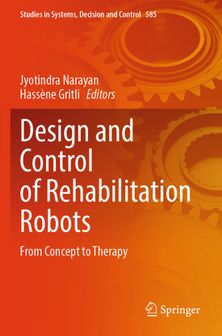
This book offers a comprehensive guide that explores the intricate world of rehabilitation robotics, bridging theoretical concepts with practical applications. It initiates with a meticulous examination of the historical evolution and present landscape of rehabilitation robotics, thereby establishing a foundational understanding of its trajectory and potential. Subsequent chapters navigate through pivotal areas such as human-robot interaction, sensing and perception technologies, path planning methodologies, telerehabilitation innovations, and inventive assist-as-need control schemes. Each subject undergoes careful scrutiny to underscore its significance and applicability in augmenting therapy outcomes and fostering patient autonomy. For instance, the discourse on human-robot interaction underscores the imperative need for designing robots that seamlessly integrate into rehabilitation settings while prioritizing patient safety and comfort. Similarly, the exploration of sensing and perception technologies illuminates the pivotal role these components play in enabling robots to interpret their environment and support healthcare professionals effectively. Moreover, the book delves into pertinent ethical and regulatory considerations inherent in the deployment of rehabilitation robots, accentuating the necessity for responsible and ethical practices in this burgeoning domain. Real-world case studies provide invaluable insights into the diverse applications of rehabilitation robots across various medical specialties, offering tangible examples of their impact on therapy outcomes, efficiency, and the challenges encountered in real-world implementation. By synthesizing pivotal insights and lessons gleaned throughout the discourse in the concluding chapter, the book underscores the transformative potential of rehabilitation robots in enhancing patient care and delineates strategies for further propelling the field forward. In essence, this book endeavors to furnish a comprehensive resource catering to researchers, engineers, clinicians, and policymakers alike, furnishing them with the requisite knowledge and tools to optimize patient-centric care in physical rehabilitation settings, and ultimately augmenting the quality of life for individuals grappling with physical impairments.
Tu possèdes ce produit et tu aimerais donner ton avis ? Commence ci-dessous à écrire ton avis. Selon le niveau de détail, écrire un avis prend en moyenne entre 3 et 10 minutes. Avec ton opinion, tu aides les autres visiteurs à faire un meilleur choix et tu tentes chaque mois de gagner 250 € ! Clique ici pour les conditions de l’action.
