
Choix le plus populaire

Amazon.be Marketplace· Marketplace
€ 57,52
3 à 4 joursLivraison gratuite
Check de website voor de levertijd | Gratis bezorgd > €20,-


Tu possèdes ce produit et tu aimerais donner ton avis ? Commence ci-dessous à écrire ton avis. Selon le niveau de détail, écrire un avis prend en moyenne entre 3 et 10 minutes. Avec ton opinion, tu aides les autres visiteurs à faire un meilleur choix et tu tentes chaque mois de gagner 250 € ! Clique ici pour les conditions de l’action.
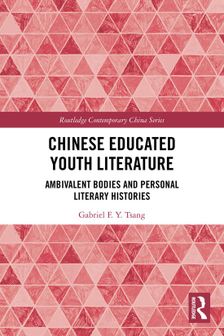
This book explores the literary history of the zhiqing, Chinese educated youth, during the liberal 1980s era of the PRC.
This book explores the literary history of the zhiqing, Chinese educated youth, during the liberal 1980s era of the PRC.
By incorporating personal experiences, literary representation, shared history, and theory, it argues that attention to bodies’ physical/physiological condition, as represented in their fictional works, can reveal their attitudes toward the shifting and anomalous socio-political environments, both at the time of their rustication in Mao Zedong’s era and at the time of writing about their experiences in Deng Xiaoping’s cities. It highlights the ideological transformation of educated youth writers’ malleable fictional bodies, which preserved and encoded their private ambivalence and dynamic compromises with political and literary dilemmas. By studying these "fictional bodies," this book deciphers the specific significance of labor, hunger, disability, and sexuality, negating the simplification of the fabricated embodiment as only containing and delivering iconoclastic spirit, sincere patriotism, personal struggle, socialist ideological control, and feminine self-consciousness.
Exploring the community of Chinese educated youth, of which Xi Jinping was one, this will be a valuable resource to students and scholars of Comparative literature, Modern Chinese literature, and Modern Chinese history.
