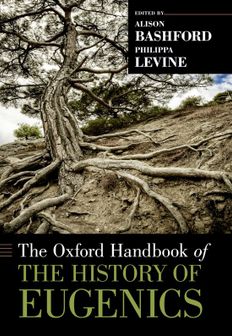

Oxford Handbook of History Eugenics

Oxford Handbook of History Eugenics

Tous les 2 prix et vendeurs

Hot Deal Alert
Prix le plus bas
Amazon.be· Vendeur reconnu
€ 51,53
-19% prijsdaling
3 à 4 joursLivraison gratuite
Check de website voor de levertijd | Gratis bezorgd > €20,-
Voir le produit
Voir le produit
Prix le plus bas
Amazon.be Marketplace· Marketplace
€ 51,53
-19% prijsdaling
3 à 4 joursLivraison gratuite
Check de website voor de levertijd | Gratis bezorgd > €20,-
Voir
Voir le produit

Aucun avis n’a encore été écrit

Question 1 sur 4

Tu possèdes ce produit et tu aimerais donner ton avis ? Commence ci-dessous à écrire ton avis. Selon le niveau de détail, écrire un avis prend en moyenne entre 3 et 10 minutes. Avec ton opinion, tu aides les autres visiteurs à faire un meilleur choix et tu tentes chaque mois de gagner 250 € ! Clique ici pour les conditions de l’action.

Quelle note donnes-tu à ce produit ?

Spécifications

Autres caractéristiques
Guide linguistique
en
Largeur de l'emballage
17,2 cm
Largeur du produit
16,5 cm
Hauteur du produit
3,8 cm
Longueur du produit
22,2 cm
Hauteur de l'emballage
24,7 cm
Longueur de l'emballage
4,5 cm
Poids de l'emballage
1,09 kg
EAN
9780199945054

Description du produit

Winner of the Cantemir Prize of the Berendel Foundation Eugenic thought and practice swept the world from the late nineteenth to the mid-twentieth century in a remarkable transnational phenomenon. Eugenics informed social and scientific policy across the political spectrum, from liberal welfare measures in emerging social-democratic states to feminist ambitions for birth control, from public health campaigns to totalitarian dreams of the "perfectibility of man." This book dispels for uninitiated readers the automatic and apparently exclusive link between eugenics and the Holocaust. It is the first world history of eugenics and an indispensable core text for both teaching and research. Eugenics has accumulated generations of interest as experts attempted to connect biology, human capacity, and policy. In the past and the present, eugenics speaks to questions of race, class, gender and sex, evolution, governance, nationalism, disability, and the social implications of science. In the current climate, in which the human genome project, stem cell research, and new reproductive technologies have proven so controversial, the history of eugenics has much to teach us about the relationship between scientific research, technology, and human ethical decision-making.