
Choix le plus populaire – Meilleur prix !

Amazon.be Marketplace· Marketplace
€ 54,94
3 à 4 joursLivraison gratuite
Check de website voor de levertijd | Gratis bezorgd > €20,-


Tu possèdes ce produit et tu aimerais donner ton avis ? Commence ci-dessous à écrire ton avis. Selon le niveau de détail, écrire un avis prend en moyenne entre 3 et 10 minutes. Avec ton opinion, tu aides les autres visiteurs à faire un meilleur choix et tu tentes chaque mois de gagner 250 € ! Clique ici pour les conditions de l’action.
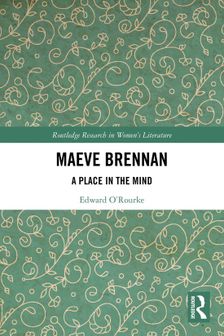
This book offers a critical overview of the effects of space, physical and conceptual, in the works of Irish American author Maeve Brennan. Single and childfree, Brennan’s iconoclastic attitudes to home, family, and womanhood place her work within the canon of radical Irish fiction.
This book explores the intricate interplay between physical spaces and psychological landscapes in the works of Irish-American author Maeve Brennan. Brennan’s writing is now classed amongst the most important of twentieth-century Irish women’s fiction, having undergone a significant reclamation and reappraisal in the 30 years since her death. Single and childfree for most of her life, Brennan eschewed the securities of family and home, experiencing an "otherness" that she shared with her fellow New Yorkers, many of them left, she wrote, hanging on to a city half-capsized––“most of them still able to laugh as they cling to the island that is their life’s predicament.” It is a suitably ambiguous expression for a writer who cultivated an interstitial existence, whose stories inhere within a dream cycle of reiterative pasts, and whose works augment and elevate the canon of radical Irish fiction.
