
Choix le plus populaire – Meilleur prix !

Amazon.be Marketplace· Marketplace
€ 96,05
5 à 6 joursLivraison gratuite
Check de website voor de levertijd | Gratis bezorgd > €20,-

Tu possèdes ce produit et tu aimerais donner ton avis ? Commence ci-dessous à écrire ton avis. Selon le niveau de détail, écrire un avis prend en moyenne entre 3 et 10 minutes. Avec ton opinion, tu aides les autres visiteurs à faire un meilleur choix et tu tentes chaque mois de gagner 250 € ! Clique ici pour les conditions de l’action.
Contributions by Sheila Bock, Olivia Caldeira, Claudia Chiang-Frost, Cynthia Cox, Ann K. Ferrell, Kate Parker Horigan, Stewart Jobrack, Eleanor Paynter, James Phelan, Susan Ritchie, Martha C. Sims, Jasmine Stork, Sydney K. Varajon, and Jason Whitesel
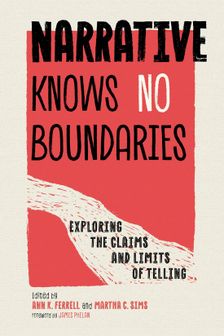
In Narrative Knows No Boundaries: Exploring the Claims and Limits of Telling, the contributors examine uses of clearly recognizable narratives, as well as narratives that are implied, assumed, or even absent because they are untellable. The essays in this collection apply key concepts from the work of acclaimed narrative scholar Amy Shuman to a broad array of narrative contexts. Since her first publications in the early 1980s, Shuman has been a much-cited force, not only within the realm of folklore studies (her home discipline), but also in a myriad of other fields, including narrative studies, critical theory, literacy studies, performance, disability studies, human rights and asylum, gender and feminist theory, and identity studies.
In the tradition of Shuman’s work, and in honor of her encouragement to her students to push boundaries, the contributors to this volume illustrate varied ways of thinking about and approaching the study of narrative. The range of contexts considered here includes migrants, refugees, and farmers; storytelling in an indigenous community, on a true crime podcast, and during disaster; sexuality education with persons with disabilities and parenting a child with a disability; master narratives about fatness and asexuality in fanfiction; and Gothic literature and tattoos. The volume’s organization emphasizes surprising connections between these subjects, grounded in concepts like narrative promises, entitlement, tellability, and hypervisibility.
