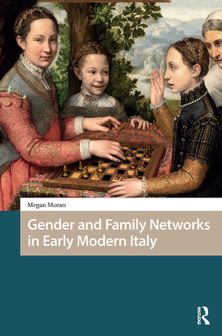
Routledge Gendering the Late Medieval and Early Modern World- Gender and Family Networks in Early Modern Italy Broché

Routledge Gendering the Late Medieval and Early Modern World- Gender and Family Networks in Early Modern Italy Broché

Tous les 2 prix et vendeurs

Choix le plus populaire

Prix le plus bas
Amazon.be· Vendeur reconnu
€ 57,32
-11% prijsdaling
3 à 4 joursLivraison gratuite
Check de website voor de levertijd | Gratis bezorgd > €20,-
Voir le produit
Voir le produit
Prix le plus bas
Amazon.be Marketplace· Marketplace
€ 57,32
-11% prijsdaling
3 à 4 joursLivraison gratuite
Check de website voor de levertijd | Gratis bezorgd > €20,-
Voir
Voir le produit

Aucun avis n’a encore été écrit

Question 1 sur 4

Tu possèdes ce produit et tu aimerais donner ton avis ? Commence ci-dessous à écrire ton avis. Selon le niveau de détail, écrire un avis prend en moyenne entre 3 et 10 minutes. Avec ton opinion, tu aides les autres visiteurs à faire un meilleur choix et tu tentes chaque mois de gagner 250 € ! Clique ici pour les conditions de l’action.

Quelle note donnes-tu à ce produit ?

Spécifications

Autres caractéristiques
Largeur du produit
15,6 cm
Longueur du produit
23,4 cm
Largeur de l'emballage
15,6 cm
Longueur de l'emballage
23,4 cm
Poids de l'emballage
460 g
Guide linguistique
en
EAN
9781041180043

Description du produit

The study adds a new focus on female letter writing, the formation of social networks, and the gender dynamics at play in the households and communities of early modern Florence and Tuscany.


Women from the Ricasoli and Spinelli families formed a wide variety of social networks within and beyond Florence through their letters as they negotiated interpersonal relationships and lineage concerns to actively contribute to their families in early modern Italy. Women were located at the center of social networks through their work in bridging their natal and marital families, cultivating commercial contacts, negotiating family obligations and the demands of religious institutions, facilitating introductions for family and friends, and forming political patronage ties. This book argues that a network model offers a framework of analysis in which to deconstruct patriarchy as a single system of institutionalized dominance in early modern Italy. Networks account for female agency as an interactive force that shaped the kinships ties, affective relationships, material connections, and political positions of these elite families as women constructed their own narratives and negotiated their own positions in family life.