Choix le plus populaire

Amazon.be Marketplace· Marketplace
€ 108,99
3 à 4 joursLivraison gratuite
Check de website voor de levertijd | Gratis bezorgd > €20,-


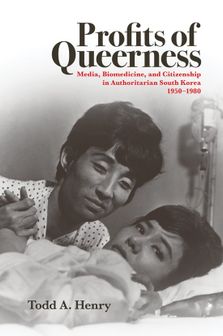
This groundbreaking, interdisciplinary study reassesses South Korea’s tumultuous era of authoritarian development (1950–1980) through previously obscured yet illuminating histories of queerness—defined as gender variance, atypical anatomies, and same-sex sexuality, among other nonnormative expressions. Instead of primarily viewing these histories through minoritarian or liberal lenses, Todd A. Henry adopts universalizing and provincializing approaches to examine how societal conformity to dimorphic expectations of gender, sex, and sexuality was foundational to the operation of militarized capitalism in this postcolonial and still-divided nation, thus revealing how biopolitical assessments of citizenship produced rigid boundaries and hierarchized valuations of human life. As such, he urges researchers of Korean Studies to pursue more fully embodied methodologies, also encouraging practitioners of LGBTI Studies to include "Hot War" and non-Western cultures in their Euro-American-centric theorizing.
Drawing on a broad range of understudied sources—including scientific case reports, journalistic exposés, question-and-answer columns, newspaper cartoons, popular films, and oral histories—Profits of Queerness meticulously documents how the commanding but contested intersection of mass media, sexual medicine, and everyday policing reestablished such categorical distinctions as "men" versus "women" and "healthy" versus "deviant," among other binaries. In particular, Henry argues that sensationalizing reporters, pathologizing doctors, surveilling officers, and everyday vigilantes consolidated a "mass dictatorship" characterized by androcentric, heteropatriarchal, and capitalist goals—aims regularly concealed by triumphalist narratives of the country’s "miraculous" recovery from the Korean War (1950–1953) and its industrialized "take-off" under the developmental dictatorship of Park Chung Hee (1961–1979). To highlight the agency of queer and intersex persons silenced in these accounts, he deploys the bottom-up notion of "shadow reading," tracing how marginalized actors transformed pejorative depictions, diagnoses, and rulings into empowering practices on the fringes of an illiberal polity. Ultimately, Henry shows how a contradictory mixture of "queerphobia" and "queerphilia" intersected as a core dynamic of South Korean "hetero-authoritarianism." More broadly, he posits these critical concepts as necessary to both understand and challenge new and ongoing forms of psychosomatic domination (re)emerging across the world today.
Tu possèdes ce produit et tu aimerais donner ton avis ? Commence ci-dessous à écrire ton avis. Selon le niveau de détail, écrire un avis prend en moyenne entre 3 et 10 minutes. Avec ton opinion, tu aides les autres visiteurs à faire un meilleur choix et tu tentes chaque mois de gagner 250 € ! Clique ici pour les conditions de l’action.