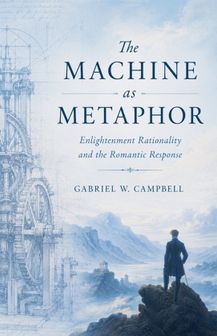
La Machine comme Métaphore : Rationalité des Lumières et Réponse Romantique, Broché

La Machine comme Métaphore : Rationalité des Lumières et Réponse Romantique, Broché

Tous les 2 prix et vendeurs

Choix le plus populaire
Prix le plus bas
Amazon.be Marketplace· Marketplace
€ 32,90
3 à 4 joursVerz. € 4,34
Check de website voor de levertijd | Gratis bezorgd > €20,-
Voir le produit
Voir le produit
Prix le plus bas
Amazon.be· Vendeur reconnu
€ 32,90
3 à 4 joursVerz. € 4,34
Check de website voor de levertijd | Gratis bezorgd > €20,-

Voir
Voir le produit

Aucun avis n’a encore été écrit

Question 1 sur 4

Tu possèdes ce produit et tu aimerais donner ton avis ? Commence ci-dessous à écrire ton avis. Selon le niveau de détail, écrire un avis prend en moyenne entre 3 et 10 minutes. Avec ton opinion, tu aides les autres visiteurs à faire un meilleur choix et tu tentes chaque mois de gagner 250 € ! Clique ici pour les conditions de l’action.

Quelle note donnes-tu à ce produit ?

Spécifications

Autres caractéristiques
Largeur du produit
14 cm
Hauteur du produit
0,8 cm
Longueur du produit
21,6 cm
Guide linguistique
en
Largeur de l'emballage
14 cm
Hauteur de l'emballage
0,8 cm
Longueur de l'emballage
21,6 cm
Poids de l'emballage
177 g
EAN
9798235754393

Description du produit

The history of ideas in the modern West can be read, in part, as a long meditation on the meaning of the machine. From the seventeenth century onward, the machine became more than a tool or a device; it became a conceptual instrument through which philosophers, scientists, political theorists, and artists sought to understand the world and humanity's place within it. The machine offered a powerful metaphor for order, predictability, and rationality. It promised mastery over nature, clarity of explanation, and the possibility of constructing social institutions with the same precision and reliability as a well¿regulated mechanism. Yet this same metaphor provoked profound unease. As the eighteenth century gave way to the nineteenth, and as industrialization transformed landscapes and lives, the machine came to symbolize alienation, reductionism, and the loss of organic wholeness. Romantic thinkers, poets, and artists mounted a sustained critique of mechanistic rationality, arguing that the machine, as metaphor and as material reality, threatened to flatten the richness of human experience and the vitality of nature.