
Choix le plus populaire – Meilleur prix !

Amazon.be Marketplace· Marketplace
€ 117,84
3 à 4 joursLivraison gratuite
Check de website voor de levertijd | Gratis bezorgd > €20,-

Tu possèdes ce produit et tu aimerais donner ton avis ? Commence ci-dessous à écrire ton avis. Selon le niveau de détail, écrire un avis prend en moyenne entre 3 et 10 minutes. Avec ton opinion, tu aides les autres visiteurs à faire un meilleur choix et tu tentes chaque mois de gagner 250 € ! Clique ici pour les conditions de l’action.
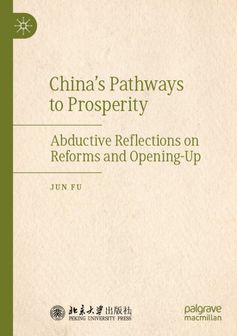
Shifting gears between the most abstract (invisible) and the most concrete (visible) world, this book contains one unifying theoretical construct and six milestone stories to shed light on China’s pathways towards building a moderately prosperous society since 1949.
Shifting gears between the most abstract (invisible) and the most concrete (visible) world, this book contains one unifying theoretical construct and six milestone stories to shed light on China’s pathways towards building a moderately prosperous society since 1949. Today, China’s GDP per capita is about US$ 12,000; it was only about US$ 150 in the late 1970s, that is, before the reform era. That is a very dramatic increase, lifting over 700 million people out of poverty in the process! What is unique about this book is that the six stories, when read together, systematically unfold a simple coherent logic — as well as a rich history — of economic development in the complex institutional setting of politics, economics and sociology that is uniquely Chinese. A key educational feature of the book is for the reader to learn and appreciate both the universals (or global vision) and the particulars (or local knowledge) of these stories so as to gain a deeper understanding of China’s development trajectory in a global setting in the past several decades. In other words, for China’s growth strategies to work, theories must be contextualized dynamically by local conditions. This book will be appreciated by students and educators alike.
