Description du produit
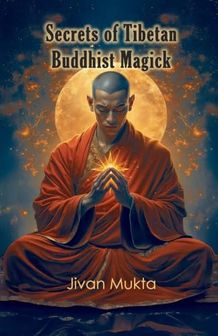
The Tibetan tradition contains a working repertoire of ritual magic. This is a serious account of how it operates.There are rites for protection and for healing, for wealth, for land, and for weather. There are rites for divination and for cursing, for raising heat in the body without fire, for training the mind inside dreams, and for steering consciousness through death itself. Most books on the subject either explain all of it away as metaphor or repackage it as ancient secrets with no source attached. This one does neither.Secrets of Tibetan Buddhist Magick sets out where these methods came from, what their practitioners claim for them, how the machinery fits together, and what a thoughtful outsider can responsibly do with it. Where the evidence is genuinely contested, the book shows you the contest rather than settling it in whichever direction flatters the reader.Inside The BookWhy mantra, mudra, and mandala are treated as instruments rather than symbols, and what each is engineered to doDeity yoga, the central operation of the tradition, explained clearly enough to show why everything else depends on itThe working rites: protection, healing, land, wealth, and weather, divination, and the wrathful arts Tibet developed and then warned aboutChod, Machig Labdron's practice of offering the body, and why it unsettles people who half understand itInner heat, dream and sleep yoga, the bardos, phowa, and togal, the practices aimed squarely at death and what lies past itThe rainbow body, including the documented modern cases and what an actual investigation of them foundWhat goes wrong: the failure modes the tradition names, and the ones Western practitioners keep rediscovering the hard wayThe manufactured Tibet, and how a century of Western invention shaped what you think you already knowThe foundational practices traditionally transmitted in the open are given here in full and ready to use: refuge, the cultivation of compassionate motivation, the common mantras, the smoke offering, simple protective practice, the mandala offering, shamatha and vipashyana, and the contemplation of death. A practitioner who does only these, and does them well, is doing something substantial.The practices that require empowerment from a living teacher are described but not handed over. You will understand what they are and how they are supposed to work. That limit is deliberate, and it is true of every book ever written on the subject, whether or not the book admits it.This second edition is revised and substantially expanded, with a glossary, a timeline, a guide to the five buddha families, a set of core mantras, and a bibliography that names its sources.For readers who want the tradition itself rather than the version invented for them. It is stranger, more rigorous, more argumentative, and more interesting than the fantasy, and it survives contact with skepticism perfectly well.