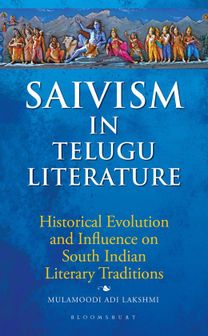
Bloomsbury Academic India Saivism in Telugu Literature: Historical Evolution and Influence on South Indian Literary Traditions

Bloomsbury Academic India Saivism in Telugu Literature: Historical Evolution and Influence on South Indian Literary Traditions

Tous les 1 prix et vendeurs

Choix le plus populaire – Meilleur prix !
Amazon.be Marketplace· Marketplace
€ 99,36
-9% prijsdaling
3 à 4 joursVerz. € 5,30
Check de website voor de levertijd | Gratis bezorgd > €20,-
Voir le produit
Voir le produit

Aucun avis n’a encore été écrit

Question 1 sur 4

Tu possèdes ce produit et tu aimerais donner ton avis ? Commence ci-dessous à écrire ton avis. Selon le niveau de détail, écrire un avis prend en moyenne entre 3 et 10 minutes. Avec ton opinion, tu aides les autres visiteurs à faire un meilleur choix et tu tentes chaque mois de gagner 250 € ! Clique ici pour les conditions de l’action.

Quelle note donnes-tu à ce produit ?

Spécifications

Autres caractéristiques
Largeur du produit
14,2 cm
Hauteur du produit
2,2 cm
Longueur du produit
22,2 cm
Largeur de l'emballage
14,2 cm
Hauteur de l'emballage
2,2 cm
Longueur de l'emballage
22,2 cm
Poids de l'emballage
471 g
EAN
9789369520985

Description du produit

This book examines the evolution of Saivism among Telugu-speaking communities, with particular emphasis on its influence on women and marginalised social groups. It is organised around three key themes: Saivism prior to the emergence of Telugu literature; the understanding and transmission of Saivism through Telugu literary works; and the linguistic, literary, and cultural relationships articulated through Telugu Saiva literature.
Saivism in Telugu Literature analyses the close relationship between religion and literature and discusses the literary trends that shaped the early development of Telugu literature. It critically examines the contributions of Balkuri¯ Somanatha, Nannaya, Dikkana (Tikkana), and other scholars influenced by Saivism and Veerashaivism. Special attention is given to the portrayal of Shiva as a major deity alongside Brahma and Vishnu in the Telugu translations of the Mahabharata by Nannaya and Tikkana. Nannaya's translation is interpreted as an effort to make the Mahabharata, regarded as the fifth Veda, accessible to common people and women. The concluding section explores the influence of the Tamil Nayanmars and highlights the linguistic and cultural interactions among Telugu, Tamil, and Sanskrit, illustrating the spread of Saivism in South India.