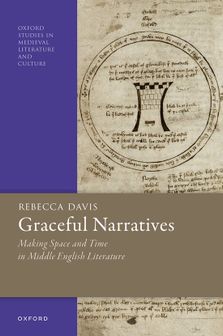
Graceful Oxford Studies in Medieval Literature and Culture: Graceful Narratives

Graceful Oxford Studies in Medieval Literature and Culture: Graceful Narratives

Tous les 2 prix et vendeurs

Choix le plus populaire – Meilleur prix !

Amazon.be· Vendeur reconnu
€ 107,08
InconnuLivraison gratuite
Check de website voor de levertijd | Gratis bezorgd > €20,-
Voir le produit
Voir le produit
Amazon.be Marketplace· Marketplace
€ 107,08
InconnuLivraison gratuite
Check de website voor de levertijd | Gratis bezorgd > €20,-
Voir le produit
Voir le produit

Spécifications

Overige kenmerken
Verpakking lengte
24 cm
Taal handleiding
en
Product hoogte
2,1 cm
Verpakkingsgewicht
606 g
Verpakking breedte
16,2 cm
Product breedte
16,2 cm
Verpakking hoogte
2,1 cm
Product lengte
24 cm
EAN
9780197903476

Description du produit

Examining works by Chaucer, Julian of Norwich, and William Langland, Graceful Narratives demonstrates that when medieval authors wrote about grace, they often produced expanded narratives that disrupted time's flow and opened possibilities for second chances and alternative outcomes.


Graceful Narratives argues that the concept of grace functions as a form of literary theory in late-medieval English texts, generating dilated, deliberative narratives that resist linear plotting and create space for alternative outcomes. Drawing on theological, legal, and courtly contexts, Davis demonstrates that grace operates not merely as a thematic concern but as a formal principle that suspends temporal flow, disrupts predetermined plots, and enables narrative transformation. The book examines six canonical Middle English works in which grace plays a pivotal role: Chaucer's Troilus and Criseyde, The Tale of Melibee, and The Franklin's Tale; Julian of Norwich's Revelation of Love; Langland's Piers Plowman; and The Castle of Perseverance. Like lyric poetry, these graceful narratives resist temporal pressures associated with linearity and plottedness, forestalling closure and opening paths towards reconciliation and amendment. Reflections on grace in literary contexts produce expanded narratives featuring the imagery and terminology of dwelling as a refuge against linear temporality's demands. By examining how medieval writers used grace to theorize fiction, Graceful Narratives contributes to conversations about premodern fictionality. Thinking grace, this book shows, necessarily means thinking fiction, the contrary to fact, the "what if?" In its resistive and restorative cultural work, the graceful narrative emerges as a form of medieval speculative fiction, answering a critical intellectual and social need for deliberative space.

Avis

Aucun avis n’a encore été écrit

Tu possèdes ce produit et tu aimerais donner ton avis ? Commence ci-dessous à écrire ton avis. Selon le niveau de détail, écrire un avis prend en moyenne entre 3 et 10 minutes. Avec ton opinion, tu aides les autres visiteurs à faire un meilleur choix et tu tentes chaque mois de gagner 250 € ! Clique ici pour les conditions de l’action.

Quelle note donnes-tu à ce produit ?