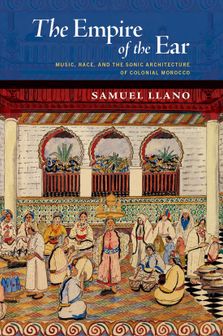
The Oxford University Press Inc New Cultural History of Music-The Empire of the Ear Hardcover

The Oxford University Press Inc New Cultural History of Music-The Empire of the Ear Hardcover

Tous les 1 prix et vendeurs

Choix le plus populaire – Meilleur prix !
Amazon.be Marketplace· Marketplace
€ 97,31
-1% prijsdaling
5 à 6 joursLivraison gratuite
Check de website voor de levertijd | Gratis bezorgd > €20,-
Voir le produit
Voir le produit

Spécifications

Overige kenmerken
Gezongen taal
en
Verpakking breedte
16,6 cm
Verpakking hoogte
3,1 cm
Verpakkingsgewicht
562 g
Verpakking lengte
23,6 cm
Meerdere uitvoerende artiesten
Non
Soort verpakking
Hardcover
Compilatie
Non
EAN
9780197628270
Oorspronkelijke releasedatum
03 augustus 2026
EAN
9780197628270
Type uitvoering
Hardcover

Description du produit

This is an open access title available under the terms of a CC BY-NC-ND 4.0 International licence. It is free to read at Oxford Scholarship Online and offered as a free PDF download from OUP and selected open access locations. Any study of colonial Morocco (1912-56) presents unique and compelling challenges due to the simultaneous presence in its territory of two foreign powers, France and Spain. The colonialist rivalry between these two countries formed dynamic and changing narratives of Morocco's musical cultures. Through their accounts of Morocco's musical activity and sound practices, French and Spanish musicologists gave shape to models of social organization that they wished to implant in Morocco at the expense of the local populations. But music was also an important instrument of resistance even if opposition to colonial rule meant adopting and subverting the discursive tropes and rhetorical strategies first formulated in the work of European scholars. In The Empire of the Ear: Music, Race, and the Sonic Architecture of Colonial Morocco, author Samuel Llano demonstrates that auditory culture, music, and musicology played a key role in negotiating the cultural struggles of colonialism in Morocco by helping to redraw society's ethnic and racial boundaries. Music was deeply involved in shaping a colonial rivalry between France and Spain, with both powers fighting to lead the discovery and promotion of Morocco's music, particularly the Andalusi and Amazigh repertoires. Llano further illuminates the ways in which France and Spain used music to promote markedly distinct and competing racial agendas in order to categorize and control Moroccan populations and their cultural practices. At the same time, he delves deeply into the significant roles that Moroccan and Maghrebi musicians and scholars played in fostering performance criteria and producing scholarship that challenged deep-seated European views, acting as a form of anti-colonial resistance. As he explores music's dual role as an instrument of power and resistance, Llano demonstrates that the impact of colonial rivalry on music scholarship and performance was more complex than the coloniser/colonised binary suggests. Finally, he analyzes how collaborations between Maghrebi and European scholars and musicians in transcription and performance obscured the lines between oppression and contestation, pushing resistance into a liminal space. In exploring these cultural tensions, The Empire of the Ear argues that race was the primary principle governing the performance and study of Morocco's music repertoires and the shaping of forms of identification among rural and urban populations.

Aucun avis n’a encore été écrit

Question 1 sur 4

Tu possèdes ce produit et tu aimerais donner ton avis ? Commence ci-dessous à écrire ton avis. Selon le niveau de détail, écrire un avis prend en moyenne entre 3 et 10 minutes. Avec ton opinion, tu aides les autres visiteurs à faire un meilleur choix et tu tentes chaque mois de gagner 250 € ! Clique ici pour les conditions de l’action.

Quelle note donnes-tu à ce produit ?