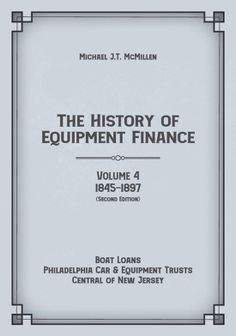
The Libri GmbH The History of Equipment Finance, Volume 4, 1845-1897

The Libri GmbH The History of Equipment Finance, Volume 4, 1845-1897

Tous les 2 prix et vendeurs

Choix le plus populaire – Meilleur prix !

Amazon.be· Vendeur reconnu
€ 64,64
3 à 4 joursLivraison gratuite
Check de website voor de levertijd | Gratis bezorgd > €20,-
Voir le produit
Voir le produit
Amazon.be Marketplace· Marketplace
€ 64,64
3 à 4 joursLivraison gratuite
Check de website voor de levertijd | Gratis bezorgd > €20,-
Voir le produit
Voir le produit

Spécifications

Overige kenmerken
Product gewicht
1,06 kg
Taal handleiding
en
Verpakking breedte
17,8 cm
Verpakking hoogte
2,9 cm
Verpakkingsgewicht
1,06 kg
Verpakking lengte
25,4 cm
EAN
9781957948324

Description du produit

Frederick Fraley became the president of Schuylkill Navigation in 1847. He inherited the boat loan structure of 1845. That structure was originally developed in an effort to repopulate the navigation with coal boats after their near total destruction by a massive flood. Under the new financing structure, SNC borrowed money and gave it to a trust that acquired boats and railroad cars and leased them to SNC. SNC subleased the boats to boat captains.By 1863, through five remarkably innovative iterations, Fraley transformed the boat loan trust from a collateral holder into an independent business unit. It borrowed and lent money, owned boats, cars, locomotives, and, eventually, financial assets, leased boats to captains, provided collateral for, and paid, other SNC debt, and engaged in mergers, among other activities. In addressing SNC's 1852 receivership and the boat loan structure, the Pennsylvania legislature, for the first time, defined equipment finance and its limited recourse features. From desperation, debt, and default, equipment finance was born.In 1868 and 1869, Lehigh Coal & Navigation transformed the boat loan into the car and equipment trust, incorporating an installment payment structure it used since the 1832 cholera pandemic. The idea for the transformation was planted in the mind of Edward W. Clark, a financier that became president of Lehigh C&N in an effort to rescue the faltering company. The structure was given shape by the Philadelphia lawyer, Charles Gibbons. Did Mendes Cohen make a contribution to the new structure?In 1871, the Central Railroad of New Jersey leased LC&N, taking control of the LC&N car and equipment trusts. The CNJ soon replicated the trusts in four new financings, acquiring thousands of rail cars as it became a leading transporter of Pennsylvania coal to New York. The trust and its documents became the Philadelphia Plan of equipment finance and survive to the present as one of the two dominant structures.These are stories told in this volume.

Avis

Aucun avis n’a encore été écrit

Tu possèdes ce produit et tu aimerais donner ton avis ? Commence ci-dessous à écrire ton avis. Selon le niveau de détail, écrire un avis prend en moyenne entre 3 et 10 minutes. Avec ton opinion, tu aides les autres visiteurs à faire un meilleur choix et tu tentes chaque mois de gagner 250 € ! Clique ici pour les conditions de l’action.

Quelle note donnes-tu à ce produit ?