
Choix le plus populaire – Meilleur prix !

Amazon.be Marketplace· Marketplace
€ 53,49
3 à 4 joursLivraison gratuite
Check de website voor de levertijd | Gratis bezorgd > €20,-

Tu possèdes ce produit et tu aimerais donner ton avis ? Commence ci-dessous à écrire ton avis. Selon le niveau de détail, écrire un avis prend en moyenne entre 3 et 10 minutes. Avec ton opinion, tu aides les autres visiteurs à faire un meilleur choix et tu tentes chaque mois de gagner 250 € ! Clique ici pour les conditions de l’action.
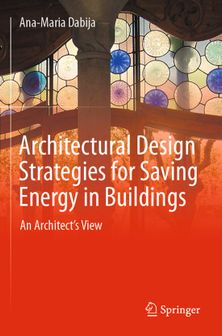
Architectural Design Strategies for Saving Energy in Buildings: An Architect's View employs an architect’s perspective, defined equally as art and engineering science, to the contemporary concept of designing buildings that use less energy.
Architectural Design Strategies for Saving Energy in Buildings: An Architect's View employs an architect’s perspective, defined equally as art and engineering science, to the contemporary concept of designing buildings that use less energy. This approach to lowering energy consumption via integrated measures (both passive and active) offers a nuanced perspective on managing building efficiency — that energy saving is not a target in itself but results as a consequence of the architectural concept. The book does not provide calculations or levels of performance. Rather, by sticking to qualitative principles of architectural design and analyzing and using the force and laws of nature in shaping the built space, the author argues for decreasing energy consumption through the process of design, the principles of building physics, the volume of the building itself, and spatial configuration as it relates to the costs of operating the building. This approach contrasts the traditional construction system of only providing a thermal insulated ”blanket” over the envelope and equipment that produces energy from unconventional sources, which can be calculated according to regulations.
Amidst the current discourse on sustainability and energy efficiency, this book offers a thought-provoking read for professionals in architecture, civil engineering, and construction, as well as graduate students in related courses. It presents an architect's approach to nearly zero-emission building design, analyses architectural strategies that efficiently use energy in buildings, and examines famous buildings and their innovative design as examples of good practice.
