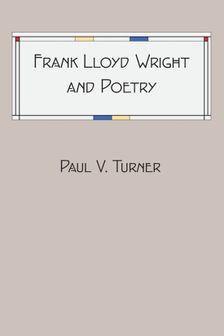
Mulberry Knoll Frank Lloyd Wright et Poésie

Mulberry Knoll Frank Lloyd Wright et Poésie

Tous les 1 prix et vendeurs

Choix le plus populaire – Meilleur prix !
Amazon.be Marketplace· Marketplace
€ 36,10
5 à 6 joursLivraison gratuite
Check de website voor de levertijd | Gratis bezorgd > €20,-
Voir le produit
Voir le produit

Aucun avis n’a encore été écrit

Question 1 sur 4

Tu possèdes ce produit et tu aimerais donner ton avis ? Commence ci-dessous à écrire ton avis. Selon le niveau de détail, écrire un avis prend en moyenne entre 3 et 10 minutes. Avec ton opinion, tu aides les autres visiteurs à faire un meilleur choix et tu tentes chaque mois de gagner 250 € ! Clique ici pour les conditions de l’action.

Quelle note donnes-tu à ce produit ?

Spécifications

Autres caractéristiques
Largeur du produit
15,2 cm
Hauteur du produit
0,3 cm
Longueur du produit
22,9 cm
Guide linguistique
en
Largeur de l'emballage
15,2 cm
Hauteur de l'emballage
0,3 cm
Longueur de l'emballage
22,9 cm
Poids de l'emballage
91 g
EAN
9780979210471

Description du produit

Thousands of books and articles have been written about nearly every aspect of the life and designs of the great American architect Frank Lloyd Wright. Frank Lloyd Wright and Poetry is the only study of an important but previously overlooked component of the architect's personality and work: his love of poetry. Throughout his life, Wright was a passionate reader of poetry, spoke about his love of poetry in his own writings, and in his early years wrote poems himself.This book proposes that Wright's love of poetry actually influenced the development of his architecture in certain ways. In his early "Prairie House" period, around 1900, he was drawn especially to conventional American poetry such as that of Edgar Allan Poe. The structure of Poe's poems--their meter, rhyme schemes, and other patterns are shown to be parallel to underlying patterns of Wright's designs of this period.Later in his life, Wright's favorite poet was Walt Whitman, whose poetry was revolutionary in its rejection of conventional forms, and in its creation of totally new concepts of poetry.Starting in the 1920s, Wright's architecture became very different from his earlier work--liberated from conventional forms and similar in certain ways to the structural traits of Whitman's poetry.Frank Lloyd Wright and Poetry demonstrates a new way of looking at the architect's work. The architectural historian Richard Longstreth has said that the book provides "a whole new dimension of the architect's thinking . . . and creative method."