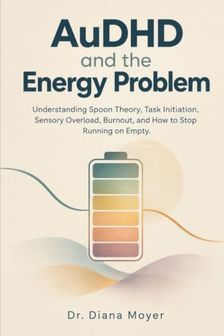
Independently Published AuDHD et le problème d'énergie : Comprendre la théorie des cuillères, l'initiation des tâches, la surcharge sensorielle, l'épuisement professionnel et comment arrêter de fonctionner à vide Broché

Independently Published AuDHD et le problème d'énergie : Comprendre la théorie des cuillères, l'initiation des tâches, la surcharge sensorielle, l'épuisement professionnel et comment arrêter de fonctionner à vide Broché

Tous les 2 prix et vendeurs

Choix le plus populaire

Prix le plus bas
Amazon.be· Vendeur reconnu
€ 13,76
3 à 4 joursLivraison gratuite
Check de website voor de levertijd | Gratis bezorgd > €20,-
Voir le produit
Voir le produit
Prix le plus bas
Amazon.be Marketplace· Marketplace
€ 13,76
3 à 4 joursLivraison gratuite
Check de website voor de levertijd | Gratis bezorgd > €20,-
Voir
Voir le produit

Spécifications

Etiketinformatie
Nom du fabricant
Libri GmbH
EAN
9798174938243
Certifié UTZ
Non
Décaféiné
Non
Acides gras polyinsaturés
Non
Forme d'emballage
Paperback
Verpakking breedte
15,2 cm
Verpakking hoogte
0,6 cm
Verpakking lengte
22,9 cm
Biodégradable
Non
Forme d'emballage
Paperback

Description du produit

Some days the tank feels full. Others, it seems to empty before the coffee even finishes brewing - and no amount of planning explains why.
For adults living at the intersection of autism and ADHD, energy does not behave the way it does for everyone else. Two neurological systems, often pulling in opposite directions, compete for the same limited resource, and the result is an exhaustion that rarely matches what the day's to-do list would suggest. A "simple" errand can cost more than an entire workday. A task that should take five minutes can sit untouched for a week. And the crash that follows an ordinary Tuesday can feel entirely disproportionate to whatever that Tuesday actually contained.
Dr. Diana Moyer, a clinical psychologist and AuDHD advocate, unpacks the real architecture behind this exhaustion - the hidden cost of masking, the neuroscience of why starting a task can feel impossible, the quiet drain of sensory overload in ordinary spaces, and the slow slide toward burnout that so many AuDHD adults recognize only after it has already taken hold.
Part explanation, part practical guide, this book offers a way to finally read the meter accurately - and to start building a life around actual capacity, rather than the illusion of unlimited willpower.

Aucun avis n’a encore été écrit

Question 1 sur 4

Tu possèdes ce produit et tu aimerais donner ton avis ? Commence ci-dessous à écrire ton avis. Selon le niveau de détail, écrire un avis prend en moyenne entre 3 et 10 minutes. Avec ton opinion, tu aides les autres visiteurs à faire un meilleur choix et tu tentes chaque mois de gagner 250 € ! Clique ici pour les conditions de l’action.

Quelle note donnes-tu à ce produit ?