Choix le plus populaire – Meilleur prix !

Amazon.be· Vendeur reconnu
€ 64,63
5 à 6 joursLivraison gratuite
Check de website voor de levertijd | Gratis bezorgd > €20,-


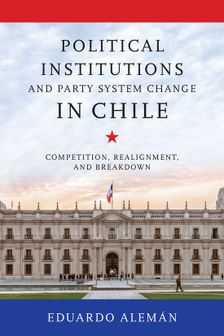
In Political Institutions and Party System Change in Chile, Eduardo Alemán offers the most comprehensive analysis to date of Chile's party system, tracing its evolution from the 1930s through the early 2020s. He begins with an analysis of how parties interacted before 1973, establishing a historical baseline both for understanding how the post-authoritarian configuration diverged from its predecessors and for tracing how patterns of competition evolved. Alemán then examines how a major realignment following the end of military rule (1973–1990) produced a distinctive, remarkably stable post-authoritarian party system and investigates why that system unraveled nearly three decades later.
Drawing from extensive original data on presidential cabinets, congressional voting, bill initiation, and elections, Alemán explores interparty competition across three core arenas: governmental, electoral, and legislative. He documents the importance of institutional arrangements inherited from the military regime by the new government and dissects how the 2015 electoral reform that eliminated the binomial system contributed to its demise.
Ultimately, Alemán challenges sociological and continuity-based interpretations of Chilean politics and presents a conceptual framework for analyzing stability and change in party systems more broadly.
Tu possèdes ce produit et tu aimerais donner ton avis ? Commence ci-dessous à écrire ton avis. Selon le niveau de détail, écrire un avis prend en moyenne entre 3 et 10 minutes. Avec ton opinion, tu aides les autres visiteurs à faire un meilleur choix et tu tentes chaque mois de gagner 250 € ! Clique ici pour les conditions de l’action.
